Parliamentary Inquiry: CHART submission

15 May 2013

The Australian Parliament has begun a broad-ranging inquiry into Australia’s relationship with Timor-Leste. We present here a summary and full text of CHART’s submission to the inquiry.

CHART calls for a critical examination of current restrictions on access to Australian government archives about East Timor and calls for Australian support for emerging archival institutions in Timor-Leste.

On May 21, the Australian parliament’s Joint Standing Committee on Foreign Affairs, Defence and Trade will commence public hearings on Australia’s relationship with Timor-Leste. The inquiry will examine government and non-government relationships and has attracted over seventy submissions – largely from Australian NGOs and individuals.

This is the third Australian parliamentary inquiry specifically on Timor in the current era, following Senate Committee inquiries in 1982-83 and 1999-2000. Historically these reports have had little obvious influence on the direction of government policy (the 1983 report was virtually ignored by the then Hawke Labor Government). However, such inquiries can provide a comprehensive insight into the thinking and actions of key players and are an important compendium of current information. The reports and the large volume of submissions and evidential transcripts also serve as a rich archival record for future generations.

CHART Submission
Our submission to the inquiry is based on an a view that the current many-faceted relationship between Australia and Timor-Leste arises directly out of the traumatic years of the Indonesian military occupation, 1975-1999. For this reason, Australians and East Timorese have a shared and abiding interest in access to historical archives about this period.

The Chart submission makes a series of recomendations in two areas: The right to the truth through access to archives, and the development of relationships between Australian and emerging East Timorese archival institutions.

Access to Australian archives on Timor
Drawing attention to the growing international interest in ‘the right to truth’, CHART makes a number of recommendations on access, including:

  • Timor records in the custody of the National Archives of Australia (NAA) be subject to a special program to expedite their release for public access
  • Processes for examining records for release be revised to speed up public access
  • The Department of Foreign Affairs’ restrictions on access be critically examined to establish whether they are over-cautious or unnecessarily restrictive.

Timor-Australia Archival relationships
Australia, as comparatively rich neighbour, is better placed than any other to cooperate with Timor-Leste in the development of sustainable archival institutions in Timor. While arguing against unsustainable, quick-fix, high technology assistance, the CHART submission recommends:

  • Exploratory relationship-building between National Archives of Australia and Timor-Leste’s Arquivo Nacional
  • Australian government support for Australian institutions with Timor archival holdings and programs
  • Australian archival institutions include in their Timor relationship programs, coordination with related Timor-engaged Australian non-government cultural initiatives
  • Programs to copy Australian-held Timor archival materials for eventual access in Timor-Leste.

CHART believes all these practical recommendations can be achieved over time and done in ways which are of relatively low cost.

Further information:
Full text of CHART submission
Links to all Inquiry submissions

[Note: More links to be added as Inquiry proceeds]


Australia’s new Labor government, March 1983

5 March 2013

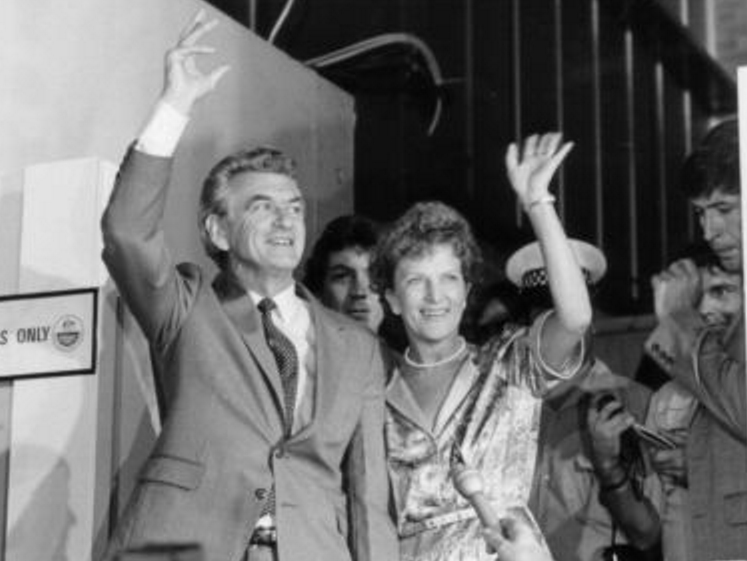
The election on 5 March 1983 of a new Labor government under the populist prime minister Bob Hawke held the possibility of a change in Canberra’s direction on Timor. The Australian Labor Party came into the 1983 election with a formal Timor position strongly supporting East Timorese self-determination.

We present here some source materials which illuminate development of Labor’s Timor policy, the new government’s approach to the policy and community reaction to early signs that the government was broadly continuing the pro-integration approach of  the Whitlam and Fraser governments.

Bob Hawke, election tally room, 5 March 1983. [Source: ABC]

Bob Hawke, election tally room, 5 March 1983. [Source: ABC]

In 1977 the Australian Labor Party (ALP) rejected former Labor Prime Minister Gough Whitlam’s approach on Timor by adopting a strong resolution opposing the Indonesian annexation and supporting self-determination. In 1979, however, this policy was significantly reduced in scope (see both texts here). A renewal of Australian activism after the political, military and humanitarian disasters inside Timor in 1978-79 included a focus on re-invigorating ALP policy.

Renewing Labor Party policy 1981-82
In early 1981, a few Australia East Timor Association (AETA) activists* began working with members of the Victorian branch of the ALP on an early draft policy proposal. The final product described principles and actions on a range of matters like self-determination, United Nations, refugees, military aid and the sea-bed boundary.

ALP rank-and-file member support for a pro-Timor policy was particularly strong in the state of Victoria. In June 1981, leading figures on the left such as Jean McLean were instrumental in the Victorian branch adopting a policy based on the AETA proposal. The Victorian branch then led the way in establishing  a national ALP Timor draft policy. Just prior to the ALP national conference which was to vote on the draft policy in July 1982, activists began to worry about the length of the proposal and suggested a less detailed but still principled alternative.

In the end, though, the ALP adopted a detailed conference resolution which included, word for word, seven of the eight principal policy statements originally proposed by AETA in 1981. The missing item was the sea-bed boundary issue. Many of the specific government actions originally proposed by AETA were not included, except the less controversial ones on information and family reunions.

Shoring-up the policy
In Victoria ALP member (and AETA chairperson) George Preston headed an  ‘East Timor Support Group’ within the party to build  support for the new policy. Established in late 1982, the group secured the signatures of four key Labor parliamentarians on a letter sent to all branches seeking their active support for the new policy. One of the signatories was Gareth Evans, later Australian Foreign Minister (1988-96); his letter agreeing to add his signature showed solid support for the policy but with some reservations.

Other encouraging signs for Timor supporters came when almost the entire membership of the Federal Parliamentary Labor Party signed a policy-supporting statement which long-time Timor activist Senator Gordon McIntosh presented to a hearing on the UN Decolonisation Committee in November 1982. Just a few days before the 1983 election, Labor foreign minister-in-waiting, Bill Hayden, gave further signs of a new Labor government’s commitment to its policy.

Labor in Government: Alarming signs
There was considerable media interest before and after the March 5 election in how the Hawke government would handle the policy (see sample coverage here). The early signs after the election were, however, alarming for the supporters of the new policy with the new prime minister failing to affirm it in other than the vaguest terms.

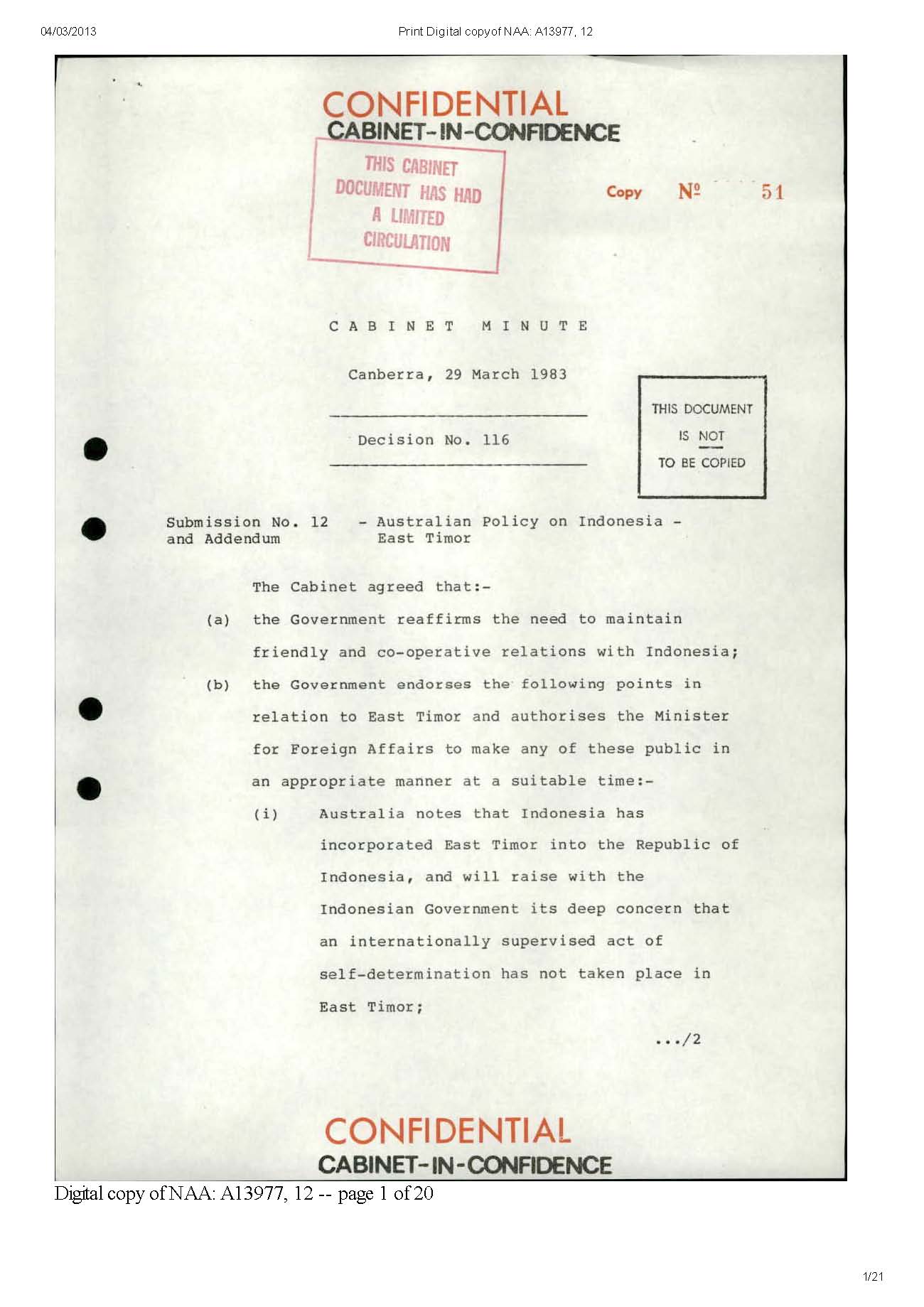
Cabinet decision March 1983

Only in 2012 was the Hawke Cabinet’s first Timor policy decision made public**. The 29 March 1983 Cabinet decision showed that the government had adopted a formula which broadly followed the script recommended by the Foreign Affairs Department to successive Australian governments since 1975. The essence of the formula was that while an internationally supervised act of self-determination had not taken place, any ‘support’ for the East Timorese must go through the Indonesian government (by inference: no actions supporting self-determination).

This formula was clearly reflected in Bill Hayden’s first overseas visit to Jakarta  in early April where he played down support for East Timorese self-determination and focussed on relatively minor Timor matters like aid and family reunion.

Activist disquiet and action
It didn’t take long for Timor supporters to realise they had work to do if the policy was to survive. Within two days of the election, the ALP East Timor Support Group directed a letter of concern to Labor parliamentarians and continued to be active in the months following.

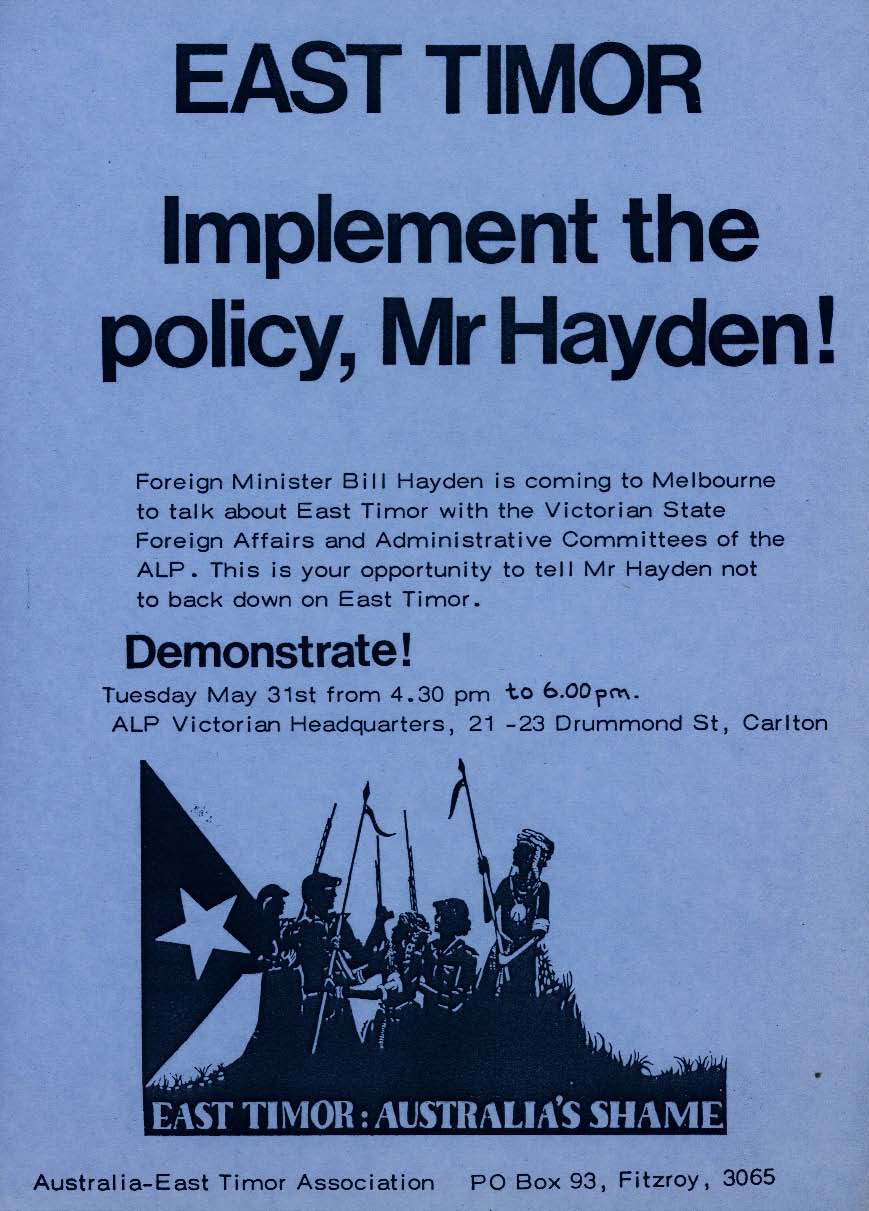
Click to viewOn March 9 a nationally-distributed letter sought participants for a March 19 strategy meeting in Melbourne. Interstate solidarity groups like the Campaign for Independent East Timor (CIET) in Sydney and Adelaide weren’t able to attend but indicated their activities and intentions.  AETA and others wrote to Bill Hayden seeking a meeting with him; AETA distributed a pamphlet which showed what it thought needed doing.

PM Hawke casts the die
Prime Minister Bob Hawke’s visit to Jakarta in early June 1983 left no-one in any doubt that the government was indeed abandoning its party policy. AETA’s subsequent pamphlet spelled out the detail.

The next element in the Hawke government’s strategy to overturn the the policy came in the form of an Australian parliamentary delegation to Indonesia in July 1983 – but that is another story.

————-

Notes:
* Initial working group members were George Preston, Pat Walsh, John Waddingham and Rod Harris.

** See full Cabinet decision and briefing notes through the National Archives of Australia RecordSearch. Worth an article in its own right.

Documents reproduced here come from the archives of the ACFOA Human Rights Office and Timor Information Service – both in CHART custody in Melbourne.


1965/66 Indonesian massacres echoed in East Timor

26 February 2013

A recent Canberra seminar on the infamous mass violence in Indonesia in 1965-66 revealed many parallels with East Timorese experience under Indonesian military occupation a decade later.

CHART’s John Waddingham participated, sharing his Timor archives project experience with those now seeking to build and share documentary evidence on Indonesia’s trauma in the 1960s.

Indonesian leftists being herded off to public execution. [Source: Unknown]

Indonesian leftists being herded off to public execution. [Source: Unknown]

The killings of several hundred thousand communists and alleged sympathisers marked the rise to presidential power of General Suharto in 1965-66. The broad story has been well-known but the detail has not.

Any critical discussion of the Suharto government’s official narrative on the killings, and its subsequent long-term imprisonment of huge numbers of ‘leftists’, was taboo in Indonesia. The fall of Suharto in 1998 has seen the lid lifted. Indonesian non-government organisations, activists and academics are now openly exploring those events – many with the aim of seeking reparations for victims and their families and holding perpetrators accountable for crimes against humanity.

Seminar topics
Held at the Australian National University, Canberra, New perspectives on the 1965 violence in Indonesia (11-13 February 2013) was organised by Australian-based academics researching 1965. In addition to well-known western researchers in this area like Robert Cribb and Kate McGregor, a number of very active researchers and activists flew in from Indonesia to communicate their work.

Topics included the emerging public debate in Indonesia, the local and Cold War aspects of the killings, Indonesian activist actions to counter the official narrative, to remove stigmas still disadvantaging victims’ families, to collect victim and perpetrator first-hand accounts and to document claims for justice and reparations. Several presentations explored the relationship between Suharto’s military and militias and other non-state actors responsible for many killings. The evidence for external support for the military, especially from the USA and UK, was one of a number of consistent threads in seminar discussion.

Komnas HAM report launch, Jakarta, July 2012.

Komnas HAM report launch, Jakarta, July 2012. [Jakarta Post]

Komnas HAM report
A recent four year study on 1965 by the official Indonesian National Commission on Human Rights (Komnas HAM) was also discussed. The Commission’s landmark report, completed in July 2012, reported evidence of widespread crimes against humanity including killings, slavery, forced removal and displacement, torture, rape, extra-legal executions. The report recommended State apologies and reparations for victims and that responsible Indonesian military officials be charged with crimes against humanity. The 200-page Indonesian language executive summary is available here.

The Komnas HAM investigations shows that the issue is no longer taboo, but some reactions to the report suggest resistance to truth and justice on the matter remains strong. Indonesia’s Attorney-General, responsible for implementing the recommendations, has rejected the report’s legitimacy.

Shared experience: Indonesians and East Timorese. [CHART]

Shared experience: Indonesians and East Timorese. [CHART]

CHART inputs
CHART participated in the third day of the seminar – a closed session for current activists and researchers to exchange views, information resources and strategies. While time was restricted, John Waddingham outlined CHART’s program and methods to locate, document and provide access to archival materials. He particularly emphasised the importance of authenticating documents to ensure they were genuine and the need to demonstrate the authenticity of newly collected oral and documentary evidence from victims and perpetrators so that they cannot be challenged as fabrications.

Many exact matches were observed in the language to describe the 1965/66 killings and the invasion and occupation of East Timor. This shared experience provides an opportunity for Indonesians and East Timorese to better understand each other’s modern history.

The strong emergence of a raft of Indonesian activists and others now digging into their hidden past is a marvellous development. We hope that one spin-off from this blossoming will be increasing interest from Indonesians in uncovering documentary and other evidence of their military’s interventions in East Timor.

– – – – – – – – – –  

Useful introductory guides to the topic:

Inside Indonesia special edition, 2010

Online Encyclopedia of mass violence item, 2009


Revisiting 1983: Thirty years on

17 January 2013

1983 was a remarkable year in East Timor’s modern history. A renewed Fretilin-led resistance emerged from the shadows under the leadership of Xanana Gusmao with news of a ceasefire and negotiations between the occupiers and the resistance. Later that year came the removal of Timor’s ‘troublesome priest’, Monsignor Lopes, a Timorese uprising, Indonesian military campaigns and an infamous massacre.

In Australia the new Hawke Labor Government worked steadily to overcome its own Party policy supporting East Timorese self-determination. It hoped that an Australian Parliamentary delegation visit to Timor in July would undermine continuing Party and broader community disquiet about the Indonesian occupation.

CHART hopes to cover many of these topics during 2013. We start here with an introductory look at the tumultuous events marking the end of the ceasefire in August-September 1983.

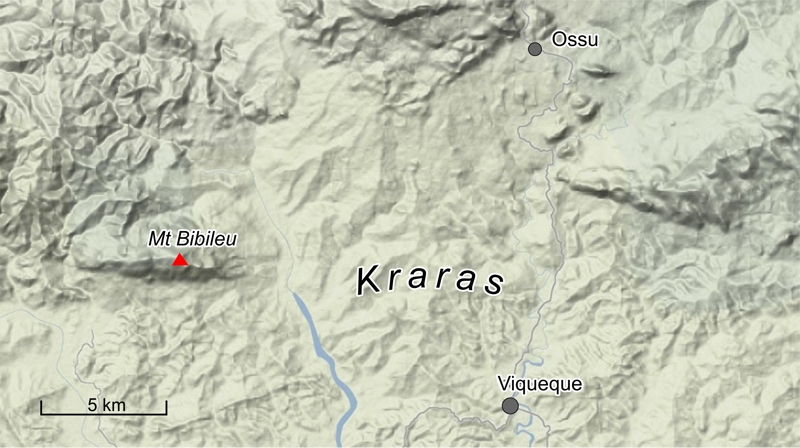
General area of Kraras massacres, September 1983. [Base map source: Google]

General area of Kraras massacres, September 1983. [Base map source: Google]

The killing of 14-16 Indonesian soldiers at Kraras/Bibileu* on August 8 1983 and the subsequent September 1983 ‘Kraras massacre’ of a large number of civilians by Indonesian military forces became internationally-known soon after – but the detail was disputed.

A brief survey of accounts now available (see list below), largely drawn from Timorese eye-witness testimony, still leaves some unanswered questions about these important historical moments.

Uprising and massacre
Media reports in 1983 of the August 8 killings left much room for doubt about the nature of the event (see pages 9-12 of this contemporary compilation). Later credible Timorese-sourced reports claimed the killings were a spontaneous response to Indonesian military violation of local women.

There now seems little doubt that that the killings were indeed part of a resistance-planned uprising in the eastern zone. This is shown in direct testimony from Xanana Gusmao (Niner) and the person who led the attack, Ular Rihik/Virgílio dos Anjos (Jolliffe, Grimshaw) and other resistance figures at that time (Chamberlain).

The massacres of civilians by Indonesian military from about September 17 1983 are documented in some detail by Jolliffe, Pilger and CAVR (Timor-Leste’s Commission for Truth). Not surprisingly, the actual numbers of dead and disappeared remain elusive. There were several separate events and the evidence comes from multiple sources, some of whom were traumatised survivors from killing sites. A total figure of around 300 dead is oft-quoted, including the single largest massacre at Tahu Bein/Wetuku River where 80-180 were killed in cold blood.

The questions
Answers to some questions which arise from reading the available texts will help future generations understand this landmark event:

1. While Xanana admitted to a planned uprising in August, was Ular’s August 8 attack at Kraras/Bibileu premature; an error in communication or judgement? And/or was it a reaction to Indonesian provocations (such as violations against local women)?

2. Were formal Falintil resistance members directly involved in the August 8 attack or was it only villagers and Timorese defecting from Indonesian-controlled paramilitary units?

3. Was the uprising the cause of the end of the ceasfire or was it simply the first shots fired in a threatened Indonesian offensive against the resistance?

4. Why did it take the Indonesian military a full month to begin its reprisals in the Kraras/Bibileu area?

5. Is there any doubt about evidence that the Indonesian reprisal operations in the Kraras/Bibileu area were directly commanded in the field by Prabowo Subianto?

6. Do the lists of Timorese dead seen by Jolliffe and held by Pilger still exist and have steps been taken to ensure they survive and are accessible to future generations?

7. What has become of legal investigations into the massacre and has anything else been done to identify/mark the killing sites and memorialise those who died?

Indonesian sources?
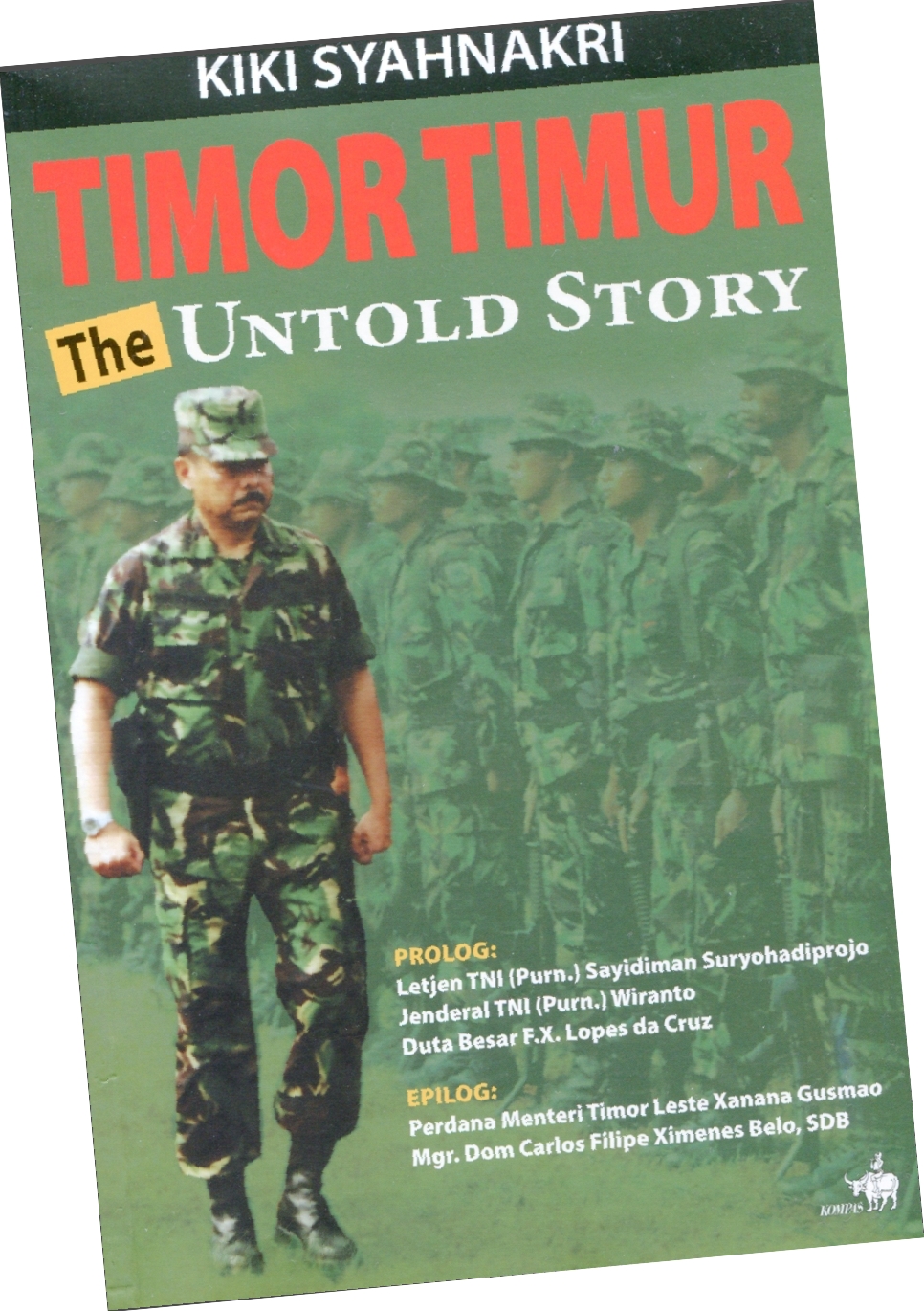
Click to enlargeThe answers to some of these questions may eventually come from Indonesian sources – but the latest Timor offering from a significant Indonesian military figure suggests ‘not yet’.

Retired Lieutenant General Kiki Syahnakri has recently launched his Timor story. Syahnakri, a fluent Tetun speaker, served several times totalling some 12 years in Timor from late 1975. His last posting was as the Indonesian martial law administrator, 7-27 September 1999.

This book requires proper scrutiny for what it might add to insights on Indonesian military thinking and actions on Timor. On the Kraras/Bibileu story, however, Syahnakri is sadly lacking:

The Cararas (sic) Incident resulted in the immediate collapse of the spirit and positive thoughts about peace and dialogue. The Korem Commander, Colonel Poerwanto, was very disappointed and angered by the attack and cancelled the efforts for Peaceful Contact. According to retired TNI Brigadier-General Johanes Haribowo – who was the Korem chief-of-staff during the Peaceful Contact period, Xanana admitted that he did not know the reason for the attack and killings at Cararas. He truly was not involved in the incident. On the contrary, he suspected that a third party was behind that incident. Moreover, it cannot be excluded that foreign forces were successful in infiltrating the Fretilin group and setting in motion the Cararas Incident. And so, the opportunity and hope to end the East Timor conflict through peaceful dialogue was obliterated. Peaceful Contact was in dissaray and failed. Armed conflict, violence, and killing by both sides occurred again.

The  ‘Cararas Incident’ refers to Ular’s attack on August 8.  ‘Peaceful Contact’ was the preferred Indonesian label for the ceasfire period. Note no specific mention is made of the Indonesian reprisals against civilian Timorese.

A full translation of this part of  Syahnakri’s book can be found here.

———

Accounts providing or referencing primary source materials

Chamberlain, E. The Struggle in Iliomar: Resistance in rural East Timor – 2008, revised. Extract only.

Chega! (Report of the Commission for Reception, Truth and Reconciliation). Dili, 2005. Chapter 3 (pp 100-106); Chapter 7.2 (pp 168-173)

Grimshaw, Z. Interview With Comandante Ular Rihik/Virgílio dos Anjos of Timor Leste. 2009. (pp 8-9)

Jolliffe, J. Balibo.  Scribe, Melbourne. 2009 (pp. 302-323)

Niner, S. Xanana. Leader of the struggle for independent Timor-Leste. Australian Scholarly Publishing, Melbourne, 2009. (pp 88-104)

Pilger, J. We helped them descend into hell. 1999

——-

* Note on Kraras/Bibileu: Jill Jolliffe has best described the difficulties of identifying the map location of these events (see her detailed Note 19, p.377). In short, Kraras is a relatively flat area or plain, not a population centre, immediately north and west of Viqueque town. Bibileu is one of a number of small population centres holding former residents of ‘old’ Bibileu, originally located on Mount Bibileu, who were relocated by the Indonesian military in earlier years.

Credits: Many thanks to Ernie Chamberlain for his translation of the passage from Syahnakri.


Falintil: Building the archival record

21 August 2012

August 20 is celebrated annually in Timor-Leste as the foundation day of Falintil*, the East Timorese resistance army. Falintil was founded in 1975, initially as a military wing of Fretilin, to fight in the brief civil war and then the many years of resistance to Indonesian military occupation which followed.

Timor Archives marks this event with a mention of two archival fragments on Falintil and some discussion on securing the archival record for future generations.

Snapshot of Tempo Semanal’s Falintil Album on Facebook.

To mark Falintil Day 2012, the East Timorese media organisation Tempo Semanal published almost 900 resistance-related images on its Facebook fan page. The photographs appear to range in time from 1975 to the early post-1999 referendum period. They include many portraits of Falintil leaders and troops and life in resistance areas.

Many of these historically important images are familiar; seen in private and public collections in Timor and internationally. Many of the images can also be seen in an online collection of East Timor’s Resistance Archive and Museum (AMRT). A 1975 set of images of Indonesian military forces in the album were featured last year on this website (see: Invasion 1975 – Photographs).

Long term archival questions
Tempo Semanal’s album is an eye-catching celebration and reminder of Falintil’s history. However, in common with similar collections of historical materials posted on Facebook and elsewhere, it is unlikely to serve as a reliable repository of archival information for future generations.

The problem with such collections is that they provide little or no information about image origins such as photographer, place, date and circumstance. Facebook users are invited or urged to add such information to the images in the online album. This is a marvellous opportunity to increase knowledge of the images, but who will take responsibility for making sure this data is kept for, and will be accessible to, future generations after Facebook disappears?

Timorese institutional solution?
Such information is most likely to be preserved by an archival institution equipped and dedicated to such tasks. Currently in Timor-Leste the AMRT leads the way in preserving and documenting archival records of the resistance, but it also has significant limitations. The Archive does not yet appear to have a regular system for seeking and recording additional information or data corrections from collection users.

What is needed is a system which not only displays archival collections but invites and allows knowledgeable users to submit missing information about individual items. Such a system needs institutional management and supervision and would be suited to organisations like the AMRT or the envisaged Institute of Memory or National Library.

—————————

Alarico Fernandes on early Falintil
We also present here a unique fragment of Falintil-related history – an audio recording of Alarico Fernandes describing some of the events in Aileu in August 1975 which were part of the formation of Falintil at that time. To listen, Click ‘play’ arrow below.

[soundcloud]http://soundcloud.com/timorarchives/alarico-fernandes-on-very[/soundcloud]

Attending a Timor strategy conference with Jose Ramos-Horta in Melbourne on 22-23 November 1975, Alarico gave a short account of the civil war and post-civil war Fretilin organisation. At the time, he was Secretary for Internal Affairs and Security in the post-civil war Fretilin administration. While the audio fragment does not decisively add new data to the known historical record of Falintil’s formation, its power lies in hearing the voice of a significant person in Fretilin’s and Falintil’s 1975-78 history.

Capturing Falintil history
The Alarico Fernandes fragment is one of an unknown number of related audio items on resistance history. Some date from 1975, others are recorded interviews with veterans during the post 1999 independence years. Many of these recordings are yet to find their way into institutional repositories for long-term preservation and access.

Alarico Fernandes is still alive but reportedly fragile in body and spirit. He, in common with many of the surviving original Timorese resistance generation, will not be with us forever. It is a matter of considerable urgency that the knowledge of the resistance generation is captured as fully as possible while it remains possible.

Ultimately this is a task for enthusiastic East Timorese and their emerging professional archival institutions.

—————————

NOTES:

* Falintil is the acronym for Forças Armadas da Libertação Nacional de Timor-Leste (Armed Forces for the National Liberation of East Timor).

Alarico Fernandes recording made by Timor Information Service, Melbourne, November 1975. Original in TIS archives.